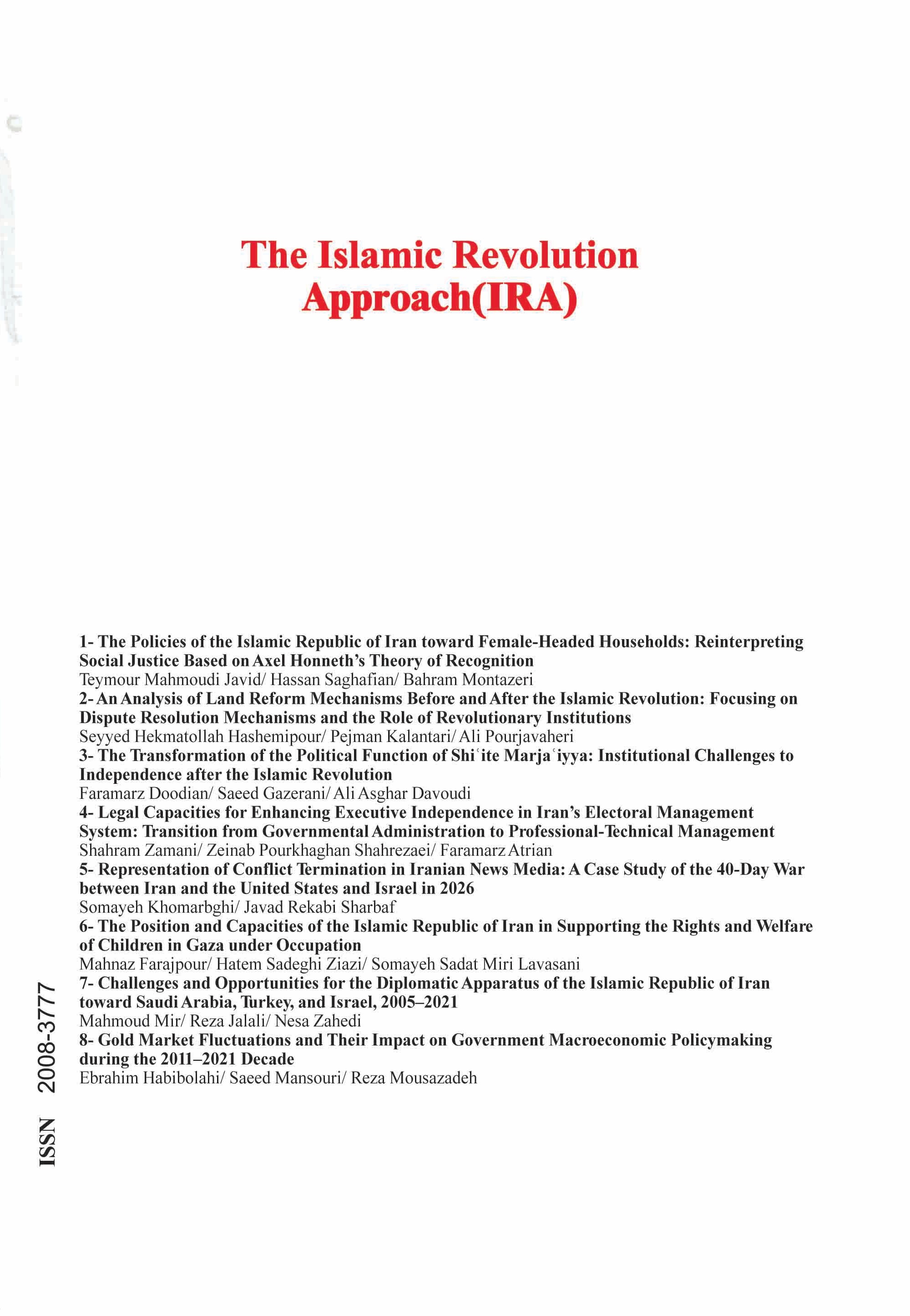
The Islamic Revolution Approach

The Islamic Revolution Approach

Gold Market Fluctuations and Their Impact on Government Macroeconomic Policymaking during the 2011–2021 Decade

Document Type : Original Article

Authors
1 PhD student in private law, Department of Law, Kish International Branch, Islamic Azad University, Kish Island, Iran
2 Associate professor, department of private law, south Tehran branch(stb) , Islamic Azad University, Tehran,Iran (corresponding author).
3 Associate, Faculty of International Relations, Ministry of Foreign Affairs, Tehran, Iran
Abstract
Gold market fluctuations in Iran during the 2011–2021 decade, in connection with factors such as intensified economic sanctions, exchange-rate shocks, persistent inflation, liquidity growth, and the depreciation of the national currency, went beyond ordinary changes in an asset market and became an issue of macroeconomic policymaking. This study aims to analyze the impact of these fluctuations on government macroeconomic policymaking and addresses the question of how and through which channels changes in the gold market affected Iran’s monetary, foreign-exchange, fiscal, and regulatory policies during the period under study. The research hypothesis is that increased gold market volatility, while reflecting macroeconomic uncertainties, contributed to broader intervention by the government and the Central Bank through its effects on inflation expectations, demand for assets, and liquidity flows. The study employs a descriptive-analytical method, with data collected through library and documentary research. The findings indicate that policymakers responded to gold market fluctuations through instruments such as the supply and presale of gold coins, foreign-exchange policies, regulatory and supervisory measures, and liquidity management. However, the gold market’s dependence on fundamental macroeconomic variables limited the effectiveness of direct and short-term interventions.

Introduction
The gold market has historically occupied a unique position in the Iranian economy, functioning not only as a commodity or luxury asset but also as a strategic instrument for preserving wealth during periods of economic instability. Between 2011 and 2021, Iran experienced severe economic turbulence caused by international sanctions, currency depreciation, inflationary pressures, declining oil revenues, and rapid liquidity growth. In this context, gold increasingly became a “safe haven” asset for households and investors seeking protection against inflation and the declining value of the Iranian rial.
The growing importance of gold during this decade transformed the market into one of the most sensitive sectors of the Iranian economy. Fluctuations in gold prices affected inflationary expectations, investment behavior, and government policymaking. Simultaneously, state authorities and the Central Bank intervened extensively through measures such as gold coin pre-sales, market injections, exchange-rate controls, taxation policies, and tighter regulations on gold transactions. Therefore, the gold market evolved into a critical component of Iran’s macroeconomic governance and crisis management framework.
This study seeks to examine how gold market fluctuations influenced government macroeconomic policymaking in Iran during 2011–2021. The research focuses on the interaction between gold price volatility and monetary, exchange-rate, fiscal, and trade policies, while also analyzing the broader economic and political implications of this relationship.
Materials and Methods
This research employs a descriptive-analytical methodology based on qualitative analysis of economic data, policy documents, academic literature, and governmental reports. The study relies on Persian and English scholarly sources related to macroeconomic instability, inflation, monetary policy, speculative markets, and gold market dynamics.The analytical framework combines perspectives from macroeconomics, political economy, and financial instability theory. The study examines the relationship between gold price fluctuations and major economic variables such as inflation, exchange rates, liquidity growth, and public expectations. In addition, the research analyzes state intervention policies implemented during the decade, including Central Bank gold coin pre-sale programs, monetary regulations, tax policies, and restrictions on informal gold trading.The study also incorporates theoretical insights from scholars such as Keynes, Friedman, Minsky, Stiglitz, and Shiller to explain the relationship between uncertainty, inflationary expectations, speculative behavior, and safe-haven assets.
Discussion
The findings indicate that gold market fluctuations in Iran were closely connected to structural economic instability. Rising inflation, repeated currency crises, and declining confidence in the national currency encouraged households and investors to shift their assets toward gold. In many cases, gold functioned as an alternative store of value and a parallel monetary asset.The study demonstrates that fluctuations in the gold market intensified inflationary expectations and speculative behavior. As gold prices increased, public anxiety regarding future economic conditions also expanded, generating a self-reinforcing cycle between inflation expectations and gold demand. Consequently, the gold market became both a reflection of economic instability and a factor contributing to further instability.The research further shows that government interventions in the gold market were extensive but largely reactive. Policies such as coin pre-sales, gold market injections, taxation reforms, transaction monitoring, and tighter regulations were mainly designed to contain short-term market volatility and public panic. However, because the structural causes of instability—such as inflation, sanctions, fiscal deficits, and liquidity growth—remained unresolved, these interventions had only temporary effects.Another important finding concerns the expansion of speculative and non-productive economic activities. High returns in the gold market encouraged capital flight from productive sectors toward speculative investments. This process weakened productive investment and contributed to the growth of rent-seeking and informal economic activities.
Conclusion
The study concludes that the gold market in Iran during 2011–2021 cannot be understood merely as a commodity or investment market. Rather, it became a central arena where economic instability, inflationary expectations, political uncertainty, and declining public trust were simultaneously reflected and reproduced. Gold market volatility significantly influenced government macroeconomic policymaking, particularly in the areas of monetary, exchange-rate, fiscal, and regulatory policies. At the same time, the market itself became a mechanism for amplifying inflationary expectations and speculative behavior. The findings suggest that sustainable stabilization of the gold market cannot be achieved solely through short-term interventions or regulatory restrictions. Instead, long-term stability requires structural economic reforms, inflation control, monetary stability, reduced uncertainty, and restoration of public confidence in economic policymaking.
Bibliography
Afkari Sardehai, B., Mirzapour, A., Siyami, A., & Kajouri, M. (2014). The relationship between futures and spot market prices of gold coins in Iran. Danesh-e Mali-e Tahlil-e Oraq-e Bahadar, 7(22). [in Persian]
Akbari, H., Tohidfam, M., & Ghorbani Sheikhneshin, A. (2024). A study of human development indicators in Iran with an emphasis on transparency (2013–2021). Faslnameh-ye Rahyaft-e Enghelab-e Eslami, 18(68), 91–116. [in Persian]
Armand, S. H., & Kashian, A. (2022). Psychological aspects of sanctions, market risks, and economic resilience. Rahbord-e Siyasi, 20, 121–152. [in Persian]
Asghari Zargarabadi, H., & Momeni, F. (2025). Historical implications of path dependence in the institutional arrangements of Iran’s monetary policymaking (1959–2021). Siyasatgozari-ye Omumi, 11(2), 50–65. [in Persian]
Bourdieu, P. (2005). The social structures of the economy. Polity.
Bourdieu, P. (2019). Distinction: A social critique of the judgement of taste. In Social stratification, class, race, and gender in sociological perspective (2nd ed., pp. 499–525). Routledge.
Donya-e Eqtesad. (2025, May 8). Theoretical challenges in Iran’s monetary system. Donya-e Eqtesad. Source page [in Persian]
Eskandari, M., Saeedi, A., & Fallah, M. (2019). Investigating the role of gold in diversifying stock investment portfolios. Cheshmandaz-e Modiriat-e Mali, 9(27), 81–107. DOI [in Persian]
Faezi, S. M., Sarlak, A., Nadri, K., & Mousavi Jahromi, Y. (2019). The standard structure of money and the monetary system by introducing ethical indicators: An ethical approach to the production and creation of money. Rahbord-e Eqtesadi, 8(30), 71–104. [in Persian]
Fadavi, M., Simbar, R., Ghorbani Sheikhneshin, A., & Keshishian Siraki, G. (2024). An examination of the challenges and opportunities of U.S. economic sanctions against Iran, with emphasis on the period 1988–2023. Faslnameh-ye Rahyaft-e Enghelab-e Eslami, 18(66), 101–126. [in Persian]
Firouzjaei, N. (2011, November–January). Organizing the gold market and its role in improving the financing system [Roundtable]. Majalleh-ye Eqtesadi, (9–10), 269–275. [in Persian]
Friedman, M. (1968). The role of monetary policy. The American Economic Review, 58(1), 1–17.
Fukuyama, F. (1996). Trust: The social virtues and the creation of prosperity. Simon & Schuster.
Giddens, A. (1990). The consequences of modernity. Stanford University Press.
Habibollahi, E., Mansouri, S., & Mousazadeh, R. (2022). The authority of Islamic government in regulating investment transactions. Faslnameh-ye Rahyaft-e Enghelab-e Eslami, 16(61), 121–138. [in Persian]
Jafarzadeh Najjar, M., & Sabahi, A. (2016). Factors affecting the price of gold in Iran. Eqtesad-e Pooli, Mali, 23(11), 83–99. [in Persian]
Keynes, J. M. (2018). The general theory of employment, interest, and money. Springer.
Mahbubi Hareh Dasht, B., Chavoshi, S. K., Jahangirnia, H., & Gholami Jamkarani, R. (2021). Countering financial and economic sanctions against the Islamic Republic of Iran through an early-warning mechanism for bank distress. Faslnameh-ye Rahyaft-e Enghelab-e Eslami, 15(57), 143–164. [in Persian]
Mardoukhi, Z. (1999). An investigation of the relationship between inflation and growth in the Iranian economy: An econometric analysis. Pazhuheshnameh-ye Eqtesad va Barnamehrizi, 36, 43–64. [in Persian]
Minsky, H. P., & Kaufman, H. (2008). Stabilizing an unstable economy. McGraw-Hill.
Mishkin, F. S. (2007). The economics of money, banking, and financial markets. Pearson Education.
Moshkelgosha, E., Ranjbar, M. R., & Mandegar, M. (2024). Iranian banks’ responses to international sanctions. Faslnameh-ye Rahyaft-e Enghelab-e Eslami, 18(67), 203–226. [in Persian]
Mottaghi, S. (2018). Explaining the effectiveness of economic sanctions imposed on the Islamic Republic of Iran from a political economy perspective. Faslnameh-ye Rahyaft-e Enghelab-e Eslami, 12(42), 89–106. [in Persian]
Naeimzadeh, A. M., Mousavi, S. S., & Neshat, N. (2022). Evaluating the role of gold and the U.S. dollar as safe havens and hedges for the Iranian stock market during and before the COVID-19 pandemic. Faslnameh-ye Siyasat-ha-ye Mali va Eqtesadi, 10(40), 133–154. Article page [in Persian]
Nili, F. (2011). Monetary policy for macroeconomic management. Tazeh-ha-ye Eqtesad, (131). [in Persian]
Nili, F., Babazadeh Khorasani, B., & Shadkar, M. (2015). Examining the dependence of subjective well-being in developing societies on macroeconomic variables. Tahqiqat-e Eqtesadi, 50(1), 21–48. [in Persian]
Piketty, T. (2014). Capital in the twenty-first century. Harvard University Press.
Pouryamin, L. (2025, August 9). What is the tax on speculation and speculative activities, and why is it important? Taline. Article page [in Persian]
Rahimdoost, A. (2025). The international political economy of gold and its implications for economic security. Mahnameh-ye Amniyat-e Eqtesadi, 13(5). Civilica record [in Persian]
Rodrik, D. (2011). The globalization paradox: Democracy and the future of the world economy. World Trade Review, 10(1), 409–417.
Salimifar, M., Mojtahedi, S., Haddad Moghadam, M., & Zendedel Shahrnavi, H. (2012). The impact of inflation on the performance of financial markets in Iran during 1973–2007. Motale'at-e Eqtesadi-ye Karbordi-ye Iran, 1(2), 177–215. [in Persian]
Samuelson, P. A., & Nordhaus, W. D. (2009). Economics (19th ed.). McGraw-Hill.
Shiller, R. J. (2020). Narrative economics: How stories go viral and drive major economic events. Princeton University Press.
Smith, A. (2002). An inquiry into the nature and causes of the wealth of nations. In Readings in economic sociology (pp. 6–17).
Stiglitz, J. E. (2010). Freefall: America, free markets, and the sinking of the world economy. W. W. Norton.
Stiglitz, J. E. (2012). The price of inequality. W. W. Norton.
Tanzi, V. (2000). Policies, institutions and the dark side of economics. Edward Elgar Publishing.
Tazeh-ha-ye Eqtesad. (2025, March). The Central Bank’s active policy in containing turbulence in the gold market [Editorial]. Tazeh-ha-ye Eqtesad, (80), 4. [in Persian]
Torbat, A. E. (2005). Impacts of the U.S. trade and financial sanctions on Iran. The World Economy, 28(3), 407–434.
.
Keywords

 
Afkari Sardehai, B., Mirzapour, A., Siyami, A., & Kajouri, M. (2014). The relationship between futures and spot market prices of gold coins in Iran. Danesh-e Mali-e Tahlil-e Oraq-e Bahadar, 7(22). [in Persian]
Akbari, H., Tohidfam, M., & Ghorbani Sheikhneshin, A. (2024). A study of human development indicators in Iran with an emphasis on transparency (2013–2021). Faslnameh-ye Rahyaft-e Enghelab-e Eslami, 18(68), 91–116. [in Persian]
Armand, S. H., & Kashian, A. (2022). Psychological aspects of sanctions, market risks, and economic resilience. Rahbord-e Siyasi, 20, 121–152. [in Persian]
Asghari Zargarabadi, H., & Momeni, F. (2025). Historical implications of path dependence in the institutional arrangements of Iran’s monetary policymaking (1959–2021). Siyasatgozari-ye Omumi, 11(2), 50–65. [in Persian]
Bourdieu, P. (2005). The social structures of the economy. Polity.
Bourdieu, P. (2019). Distinction: A social critique of the judgement of taste. In Social stratification, class, race, and gender in sociological perspective (2nd ed., pp. 499–525). Routledge.
Donya-e Eqtesad. (2025, May 8). Theoretical challenges in Iran’s monetary system. Donya-e Eqtesad. Source page [in Persian]
Eskandari, M., Saeedi, A., & Fallah, M. (2019). Investigating the role of gold in diversifying stock investment portfolios. Cheshmandaz-e Modiriat-e Mali, 9(27), 81–107. DOI [in Persian]
Faezi, S. M., Sarlak, A., Nadri, K., & Mousavi Jahromi, Y. (2019). The standard structure of money and the monetary system by introducing ethical indicators: An ethical approach to the production and creation of money. Rahbord-e Eqtesadi, 8(30), 71–104. [in Persian]
Fadavi, M., Simbar, R., Ghorbani Sheikhneshin, A., & Keshishian Siraki, G. (2024). An examination of the challenges and opportunities of U.S. economic sanctions against Iran, with emphasis on the period 1988–2023. Faslnameh-ye Rahyaft-e Enghelab-e Eslami, 18(66), 101–126. [in Persian]
Firouzjaei, N. (2011, November–January). Organizing the gold market and its role in improving the financing system [Roundtable]. Majalleh-ye Eqtesadi, (9–10), 269–275. [in Persian]
Friedman, M. (1968). The role of monetary policy. The American Economic Review, 58(1), 1–17.
Fukuyama, F. (1996). Trust: The social virtues and the creation of prosperity. Simon & Schuster.
Giddens, A. (1990). The consequences of modernity. Stanford University Press.
Habibollahi, E., Mansouri, S., & Mousazadeh, R. (2022). The authority of Islamic government in regulating investment transactions. Faslnameh-ye Rahyaft-e Enghelab-e Eslami, 16(61), 121–138. [in Persian]
Jafarzadeh Najjar, M., & Sabahi, A. (2016). Factors affecting the price of gold in Iran. Eqtesad-e Pooli, Mali, 23(11), 83–99. [in Persian]
Keynes, J. M. (2018). The general theory of employment, interest, and money. Springer.
Mahbubi Hareh Dasht, B., Chavoshi, S. K., Jahangirnia, H., & Gholami Jamkarani, R. (2021). Countering financial and economic sanctions against the Islamic Republic of Iran through an early-warning mechanism for bank distress. Faslnameh-ye Rahyaft-e Enghelab-e Eslami, 15(57), 143–164. [in Persian]
Mardoukhi, Z. (1999). An investigation of the relationship between inflation and growth in the Iranian economy: An econometric analysis. Pazhuheshnameh-ye Eqtesad va Barnamehrizi, 36, 43–64. [in Persian]
Minsky, H. P., & Kaufman, H. (2008). Stabilizing an unstable economy. McGraw-Hill.
Mishkin, F. S. (2007). The economics of money, banking, and financial markets. Pearson Education.
Moshkelgosha, E., Ranjbar, M. R., & Mandegar, M. (2024). Iranian banks’ responses to international sanctions. Faslnameh-ye Rahyaft-e Enghelab-e Eslami, 18(67), 203–226. [in Persian]
Mottaghi, S. (2018). Explaining the effectiveness of economic sanctions imposed on the Islamic Republic of Iran from a political economy perspective. Faslnameh-ye Rahyaft-e Enghelab-e Eslami, 12(42), 89–106. [in Persian]
Naeimzadeh, A. M., Mousavi, S. S., & Neshat, N. (2022). Evaluating the role of gold and the U.S. dollar as safe havens and hedges for the Iranian stock market during and before the COVID-19 pandemic. Faslnameh-ye Siyasat-ha-ye Mali va Eqtesadi, 10(40), 133–154. Article page [in Persian]
Nili, F. (2011). Monetary policy for macroeconomic management. Tazeh-ha-ye Eqtesad, (131). [in Persian]
Nili, F., Babazadeh Khorasani, B., & Shadkar, M. (2015). Examining the dependence of subjective well-being in developing societies on macroeconomic variables. Tahqiqat-e Eqtesadi, 50(1), 21–48. [in Persian]
Piketty, T. (2014). Capital in the twenty-first century. Harvard University Press.
Pouryamin, L. (2025, August 9). What is the tax on speculation and speculative activities, and why is it important? Taline. Article page [in Persian]
Rahimdoost, A. (2025). The international political economy of gold and its implications for economic security. Mahnameh-ye Amniyat-e Eqtesadi, 13(5). Civilica record [in Persian]
Rodrik, D. (2011). The globalization paradox: Democracy and the future of the world economy. World Trade Review, 10(1), 409–417.
Salimifar, M., Mojtahedi, S., Haddad Moghadam, M., & Zendedel Shahrnavi, H. (2012). The impact of inflation on the performance of financial markets in Iran during 1973–2007. Motale'at-e Eqtesadi-ye Karbordi-ye Iran, 1(2), 177–215. [in Persian]
Samuelson, P. A., & Nordhaus, W. D. (2009). Economics (19th ed.). McGraw-Hill.
Shiller, R. J. (2020). Narrative economics: How stories go viral and drive major economic events. Princeton University Press.
Smith, A. (2002). An inquiry into the nature and causes of the wealth of nations. In Readings in economic sociology (pp. 6–17).
Stiglitz, J. E. (2010). Freefall: America, free markets, and the sinking of the world economy. W. W. Norton.
Stiglitz, J. E. (2012). The price of inequality. W. W. Norton.
Tanzi, V. (2000). Policies, institutions and the dark side of economics. Edward Elgar Publishing.
Tazeh-ha-ye Eqtesad. (2025, March). The Central Bank’s active policy in containing turbulence in the gold market [Editorial]. Tazeh-ha-ye Eqtesad, (80), 4. [in Persian]
Torbat, A. E. (2005). Impacts of the U.S. trade and financial sanctions on Iran. The World Economy, 28(3), 407–434.
.