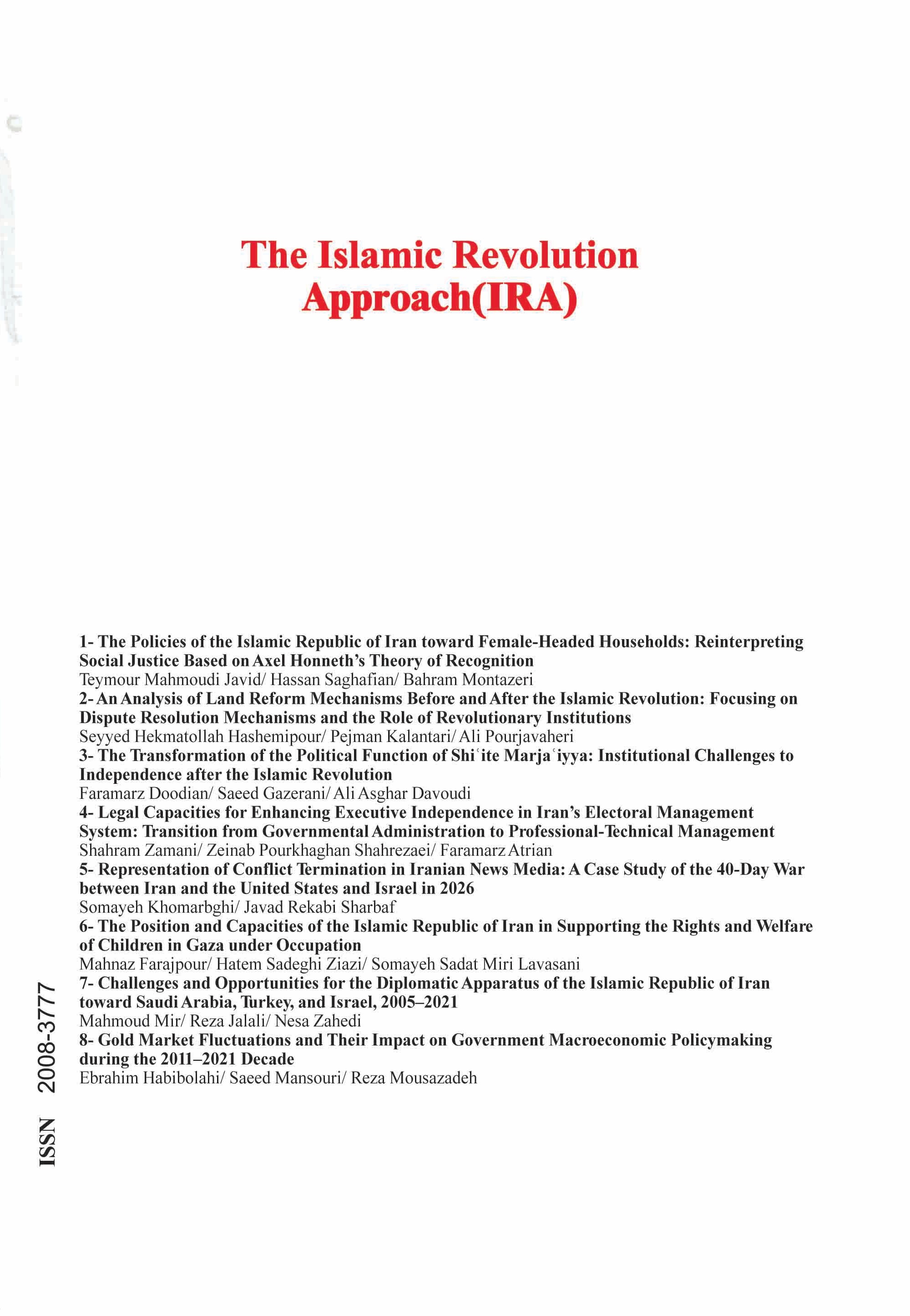
The Islamic Revolution Approach

The Islamic Revolution Approach

Legal Capacities for Enhancing Executive Independence in Iran’s Electoral Management System: Transition from Governmental Administration to Professional-Technical Management

Document Type : Original Article

Authors
1 Ph.D. Student, Department of Public Law, Faculty of Law, Najafabad Branch, Islamic Azad University, Najafabad, Iran
2 Assistant Professor, Department of Law, Isfahan (Khorasgan) Branch, Islamic Azad University, Isfahan, Iran
3 Assistant Professor, Department of Public Law, Faculty of Law, Najafabad Branch, Islamic Azad University, Najafabad, Iran
Abstract
In contemporary political systems, electoral management is not merely an administrative process for conducting voting; rather, it constitutes an essential component of electoral governance and plays a significant role in ensuring legitimacy, transparency, and public trust in the political process. In recent decades, many countries have moved toward establishing professional and relatively independent electoral bodies in order to reduce the risks of politicization and potential conflicts of interest in election administration. The present study aims to analyze the legal capacities for enhancing executive independence in Iran’s electoral management system and to examine the possibility of a gradual transition from governmental administration to professional-technical management. The main research question is whether, within the framework of Iran’s constitutional law, it is possible to establish or strengthen professional and relatively independent mechanisms for electoral administration. The study employs a descriptive-analytical method, and the data were collected through library research, legal documents, specialized reports, and comparative studies. The findings indicate that the Constitution of the Islamic Republic of Iran does not explicitly require the continuation of a fully government-centered model of electoral administration. Accordingly, legal capacities can be identified for the gradual professionalization, specialization, and strengthening of functional independence in electoral management within the existing constitutional order.
Introduction
Electoral management has increasingly evolved from a purely administrative function into an important component of electoral governance. Contemporary approaches emphasize that elections require not only legally valid procedures, but also institutional arrangements capable of ensuring impartiality, transparency, professionalism, accountability, and public confidence. In many political systems, the concentration of electoral administration within the executive branch has raised concerns regarding institutional conflicts of interest, particularly where the incumbent government may itself be politically involved in the electoral process. Consequently, comparative electoral practice has increasingly moved toward independent, mixed, or semi-independent electoral management models. In Iran, election administration is mainly carried out through the Ministry of Interior and its administrative hierarchy, while electoral supervision is constitutionally assigned to the Guardian Council. This institutional arrangement raises the question of whether electoral administration can be made more professional and functionally independent without disrupting the existing constitutional structure. The central question of this study is therefore whether Iran’s constitutional and legal framework contains sufficient capacity for a gradual transition from government-centered electoral administration toward a professional-technical model.
Materials and Methods
This study adopts a descriptive-analytical method and is based on documentary and library research. The sources include the Constitution of the Islamic Republic of Iran, ordinary electoral laws, specialized reports, scholarly literature on electoral governance and electoral integrity, and comparative studies of electoral management bodies. The analysis is structured around three dimensions: first, the theoretical foundations of electoral governance and institutional independence; second, the legal and institutional structure of electoral administration in Iran; and third, comparative experiences of countries that have established professional or relatively independent electoral bodies. Particular attention is paid to the distinction between electoral supervision and electoral administration, because Article 99 of the Constitution assigns supervision to the Guardian Council but does not expressly designate a specific executive institution for administering elections. The study also examines the concepts of functional independence, administrative neutrality, professionalization, transparency, and accountability as essential criteria for evaluating possible institutional reform.
Discussion
The findings suggest that Iran’s current electoral management system can be characterized as a dual structure in which the executive administration of elections is primarily undertaken by the government, while the Guardian Council exercises constitutional supervision. This model provides institutional oversight, but it also creates several challenges, including dependence of electoral administration on the incumbent executive branch, limited organizational permanence, insufficient professional specialization, overlap between implementation and supervision, and concerns regarding transparency and public perception of neutrality. The study further shows that the Constitution does not explicitly require the Ministry of Interior to remain the permanent executive authority for elections. Article 99 regulates supervision rather than execution, creating a potential legal space for ordinary legislation to redesign the executive structure while preserving the constitutional supervisory role of the Guardian Council.
Comparative experiences from India, South Africa, Mexico, and South Korea demonstrate that electoral independence does not necessarily mean complete institutional separation from the legal and political system. Rather, successful electoral management bodies generally combine functional independence with legal accountability, budgetary oversight, judicial review, organizational continuity, specialized personnel, technological capacity, and transparent procedures. The study therefore argues that the most realistic model for Iran would not be absolute institutional independence, but gradual functional independence and professionalization. Such a transition could include the establishment of a permanent specialized electoral organization, professional training systems, data-based transparency, clearer separation between implementation and supervision, and stronger accountability mechanisms.
Conclusion
The study concludes that the existing constitutional framework provides legal room for strengthening the professional and functional independence of electoral administration in Iran. The Constitution does not expressly impose a permanently government-centered model of election administration, while the supervisory authority of the Guardian Council can remain intact under a redesigned executive structure. Accordingly, reform need not require a complete constitutional rupture; it may instead proceed through ordinary legislation and gradual institutional restructuring. The transition toward a professional-technical model should therefore be understood primarily as a process of institutional professionalization rather than the creation of an entirely separate political authority. Its success would depend on maintaining a balance among independence, accountability, transparency, administrative efficiency, and constitutional supervision. Within this framework, a permanent and specialized electoral management body could potentially reduce institutional conflicts of interest, strengthen organizational memory, enhance technical expertise, and improve public confidence in electoral administration.
Bibliography
Ahuja, A., & Ostermann, S. (2020). The Election Commission of India: Guardian of democracy. In A. Boin & L. A. Fahy (Eds.), Guardians of public value: How public organisations become and remain institutions (pp. 37–62). Palgrave Macmillan.
Alipour, H. (2015). The legal system of elections and the right to vote in the Islamic Republic of Iran. Motale'at-e Rahbordi, 18(3), 63–88. [in Persian]
Amid Zanjani, A. A. (2024). General principles of constitutional law of the Islamic Republic of Iran (5th ed.). Majd. [in Persian]
Amiri, M., & Jalilvand, M. Sh. (2023). “The right to self-determination from the perspective of political obligation with reference to the Constitution of the Islamic Republic of Iran.” Faslnameh-ye Rahyaft-e Enghelab-e Eslami, 17(65), 3–18. [in Persian]
Bashiriyeh, H. (2002). Obstacles to political development in Iran. Gam-e No. [in Persian]
Birch, S. (2011). Electoral malpractice. Oxford University Press.
Elklit, J., & Reynolds, A. (2002). The impact of election administration on the legitimacy of emerging democracies: A new comparative politics research agenda. Commonwealth & Comparative Politics, 40(2), 86–119.
Fattahi Zafarghandi, A. (2018). The Guardian Council: Supervision of elections. Guardian Council Research Institute. [in Persian]
Fereydouni Khanimani, M. A., Raei Dehghi, M., Masoud, Gh., & Zarifkarfard, S. M. (2021). “The perspective of the constitutional law of the Islamic Republic of Iran on the selection of political officeholders.” Faslnameh-ye Rahyaft-e Enghelab-e Eslami, 15(56), 27–44. [in Persian]
Fohandazh Saadi, S. M., Mohammadjani, M. R., & Haghighat, H. R. (2025). “An examination of the Islamic Consultative Assembly elections and their conformity with the views of Imam Khomeini and the Supreme Leader: A case study of Fars Province, sixth to tenth parliamentary terms.” Faslnameh-ye Rahyaft-e Enghelab-e Eslami, 19(70), 178–197. [in Persian]
Hartlyn, J., McCoy, J., & Mustillo, T. M. (2008). Electoral governance matters: Explaining the quality of elections in contemporary Latin America. Comparative Political Studies, 41(1), 73–98.
Hashemi, S. M. (2024). Constitutional law of the Islamic Republic of Iran: General principles and foundations of the system (Vol. 1, 2nd rev. ed., 18th printing). Mizan. [in Persian]
Honarmand, M., Ebrahimian, H., & Habibnezhad, S. A. (2023). “Examining strategies for reforming the legislative structure of the Iranian Constitution within the framework of general policies and upstream documents.” Faslnameh-ye Rahyaft-e Enghelab-e Eslami, 17(64), 123–140. [in Persian]
Homyār, H., Sheikh Movahed, M., & Alaee, H. (2024). “The impact of the electoral system on citizens’ political participation in Iran.” Faslnameh-ye Rahyaft-e Enghelab-e Eslami, 18(68), 235–256. [in Persian]
International IDEA. (2014). Electoral management design: Revised edition. International Institute for Democracy and Electoral Assistance.
International IDEA. (2021). Independence in electoral management. International Institute for Democracy and Electoral Assistance.
Kamel Hosseini, S. M., Karimi, Y., & Kouhzadi, F. (2025). “A futures-oriented approach to the relationship between organizational health and corporate governance with the mediating role of organizational ethics.” Faslnameh-ye Ayandeh-Pazhuhi-ye Defa'i, 10(38), 237–270. [in Persian]
Kapoor, K., & Ravi, S. (2014). India’s Election Commission: Strengthening democracy. Brookings Institution.
Khorramshad, M. B., & Rafiei Ghahesareh, A. (2013). “The electoral system in elections to the Islamic Consultative Assembly.” Journal of Contemporary Political Studies, 3(9), 41–66. [in Persian]
Kiani, V., Taheri, A., & Azghandi, A. (2022). “The impact of political participation on Iran’s national security during the period from June 1997 to July 2005.” Faslnameh-ye Rahyaft-e Enghelab-e Eslami, 16(58), 67–86. [in Persian]
Law on Elections to the Islamic Consultative Assembly. (1999). Approved on November 28, 1999, by the Islamic Consultative Assembly. Research Center of the Islamic Consultative Assembly. [in Persian]
Lee, S. (2007). Democratic transition and the consolidation of democracy in South Korea. Taiwan Journal of Democracy, 3(1), 99–125.
Mozaffar, S., & Schedler, A. (2002). The comparative study of electoral governance: Introduction. International Political Science Review, 23(1), 5–27. https://doi.org/10.1177/0192512102023001001
Norris, P. (2014). Why electoral integrity matters. Cambridge University Press. https://doi.org/10.1017/CBO9781107280861
Norris, P., Frank, R. W., & Martínez i Coma, F. (2014). Advancing electoral integrity. Electoral Integrity Project.
Pastor, R. A. (1999). The role of electoral administration in democratic transitions. Democratization, 6(4), 1–27.
Pedram, A., & Panahi, F. (2021). “Scenarios for the 2021 presidential election of the Islamic Republic of Iran from the perspective of national security.” Faslnameh-ye Ayandeh-Pazhuhi-ye Defa'i, 6(20), 7–31. https://doi.org/10.22034/dfsr.2021.525174.1471 [in Persian]
Rahmani, Gh., & Mousavinejad, S. M. (2023). “The desirable electoral system for the Islamic Consultative Assembly in light of the general election policies.” Rahbord, 32(4), 583–606. [in Persian]
Soli, M., Nariman, S., Keshishian Siraki, G., & Khodaverdi, H. (2025). “The role of political parties in the policymaking system of the Islamic Republic of Iran.” Faslnameh-ye Rahyaft-e Enghelab-e Eslami, 19(70), 28–53. [in Persian]
South Africa. (1996). Constitution of the Republic of South Africa.
Tahan Nazif, H., & Kadkhodamoradi, K. (2019). “Pathology of the legal system governing the supervision processes of Islamic Consultative Assembly elections in light of the general election policies.” Motale'at-e Hoquq-e Omumi, 49(4), 1127–1148. [in Persian]
Zare Ganjaroudi, M., Kazemian Shirvan, Gh., Ghorbanizadeh, V., & Khanmohammadi, H. (2023). “Strategic components of sustainable development with a national power approach in Iran.” Faslnameh-ye Ayandeh-Pazhuhi-ye Defa'i, 8(30), 7–37. https://doi.org/10.22034/dfsr.2023.2005554.1711 [in Persian]
Zarei, M. J. (2018). “Republicanism and legal guarantees of elections in Iran.” Faslnameh-ye Hoquq-e Asasi, 15(2), 81–109. [in Persian]
Keywords

 
Ahuja, A., & Ostermann, S. (2020). The Election Commission of India: Guardian of democracy. In A. Boin & L. A. Fahy (Eds.), Guardians of public value: How public organisations become and remain institutions (pp. 37–62). Palgrave Macmillan.
Alipour, H. (2015). The legal system of elections and the right to vote in the Islamic Republic of Iran. Motale'at-e Rahbordi, 18(3), 63–88. [in Persian]
Amid Zanjani, A. A. (2024). General principles of constitutional law of the Islamic Republic of Iran (5th ed.). Majd. [in Persian]
Amiri, M., & Jalilvand, M. Sh. (2023). “The right to self-determination from the perspective of political obligation with reference to the Constitution of the Islamic Republic of Iran.” Faslnameh-ye Rahyaft-e Enghelab-e Eslami, 17(65), 3–18. [in Persian]
Bashiriyeh, H. (2002). Obstacles to political development in Iran. Gam-e No. [in Persian]
Birch, S. (2011). Electoral malpractice. Oxford University Press.
Elklit, J., & Reynolds, A. (2002). The impact of election administration on the legitimacy of emerging democracies: A new comparative politics research agenda. Commonwealth & Comparative Politics, 40(2), 86–119.
Fattahi Zafarghandi, A. (2018). The Guardian Council: Supervision of elections. Guardian Council Research Institute. [in Persian]
Fereydouni Khanimani, M. A., Raei Dehghi, M., Masoud, Gh., & Zarifkarfard, S. M. (2021). “The perspective of the constitutional law of the Islamic Republic of Iran on the selection of political officeholders.” Faslnameh-ye Rahyaft-e Enghelab-e Eslami, 15(56), 27–44. [in Persian]
Fohandazh Saadi, S. M., Mohammadjani, M. R., & Haghighat, H. R. (2025). “An examination of the Islamic Consultative Assembly elections and their conformity with the views of Imam Khomeini and the Supreme Leader: A case study of Fars Province, sixth to tenth parliamentary terms.” Faslnameh-ye Rahyaft-e Enghelab-e Eslami, 19(70), 178–197. [in Persian]
Hartlyn, J., McCoy, J., & Mustillo, T. M. (2008). Electoral governance matters: Explaining the quality of elections in contemporary Latin America. Comparative Political Studies, 41(1), 73–98.
Hashemi, S. M. (2024). Constitutional law of the Islamic Republic of Iran: General principles and foundations of the system (Vol. 1, 2nd rev. ed., 18th printing). Mizan. [in Persian]
Honarmand, M., Ebrahimian, H., & Habibnezhad, S. A. (2023). “Examining strategies for reforming the legislative structure of the Iranian Constitution within the framework of general policies and upstream documents.” Faslnameh-ye Rahyaft-e Enghelab-e Eslami, 17(64), 123–140. [in Persian]
Homyār, H., Sheikh Movahed, M., & Alaee, H. (2024). “The impact of the electoral system on citizens’ political participation in Iran.” Faslnameh-ye Rahyaft-e Enghelab-e Eslami, 18(68), 235–256. [in Persian]
International IDEA. (2014). Electoral management design: Revised edition. International Institute for Democracy and Electoral Assistance.
International IDEA. (2021). Independence in electoral management. International Institute for Democracy and Electoral Assistance.
Kamel Hosseini, S. M., Karimi, Y., & Kouhzadi, F. (2025). “A futures-oriented approach to the relationship between organizational health and corporate governance with the mediating role of organizational ethics.” Faslnameh-ye Ayandeh-Pazhuhi-ye Defa'i, 10(38), 237–270. [in Persian]
Kapoor, K., & Ravi, S. (2014). India’s Election Commission: Strengthening democracy. Brookings Institution.
Khorramshad, M. B., & Rafiei Ghahesareh, A. (2013). “The electoral system in elections to the Islamic Consultative Assembly.” Journal of Contemporary Political Studies, 3(9), 41–66. [in Persian]
Kiani, V., Taheri, A., & Azghandi, A. (2022). “The impact of political participation on Iran’s national security during the period from June 1997 to July 2005.” Faslnameh-ye Rahyaft-e Enghelab-e Eslami, 16(58), 67–86. [in Persian]
Law on Elections to the Islamic Consultative Assembly. (1999). Approved on November 28, 1999, by the Islamic Consultative Assembly. Research Center of the Islamic Consultative Assembly. [in Persian]
Lee, S. (2007). Democratic transition and the consolidation of democracy in South Korea. Taiwan Journal of Democracy, 3(1), 99–125.
Mozaffar, S., & Schedler, A. (2002). The comparative study of electoral governance: Introduction. International Political Science Review, 23(1), 5–27. https://doi.org/10.1177/0192512102023001001
Norris, P. (2014). Why electoral integrity matters. Cambridge University Press. https://doi.org/10.1017/CBO9781107280861
Norris, P., Frank, R. W., & Martínez i Coma, F. (2014). Advancing electoral integrity. Electoral Integrity Project.
Pastor, R. A. (1999). The role of electoral administration in democratic transitions. Democratization, 6(4), 1–27.
Pedram, A., & Panahi, F. (2021). “Scenarios for the 2021 presidential election of the Islamic Republic of Iran from the perspective of national security.” Faslnameh-ye Ayandeh-Pazhuhi-ye Defa'i, 6(20), 7–31. https://doi.org/10.22034/dfsr.2021.525174.1471 [in Persian]
Rahmani, Gh., & Mousavinejad, S. M. (2023). “The desirable electoral system for the Islamic Consultative Assembly in light of the general election policies.” Rahbord, 32(4), 583–606. [in Persian]
Soli, M., Nariman, S., Keshishian Siraki, G., & Khodaverdi, H. (2025). “The role of political parties in the policymaking system of the Islamic Republic of Iran.” Faslnameh-ye Rahyaft-e Enghelab-e Eslami, 19(70), 28–53. [in Persian]
South Africa. (1996). Constitution of the Republic of South Africa.
Tahan Nazif, H., & Kadkhodamoradi, K. (2019). “Pathology of the legal system governing the supervision processes of Islamic Consultative Assembly elections in light of the general election policies.” Motale'at-e Hoquq-e Omumi, 49(4), 1127–1148. [in Persian]
Zare Ganjaroudi, M., Kazemian Shirvan, Gh., Ghorbanizadeh, V., & Khanmohammadi, H. (2023). “Strategic components of sustainable development with a national power approach in Iran.” Faslnameh-ye Ayandeh-Pazhuhi-ye Defa'i, 8(30), 7–37. https://doi.org/10.22034/dfsr.2023.2005554.1711 [in Persian]
Zarei, M. J. (2018). “Republicanism and legal guarantees of elections in Iran.” Faslnameh-ye Hoquq-e Asasi, 15(2), 81–109. [in Persian]