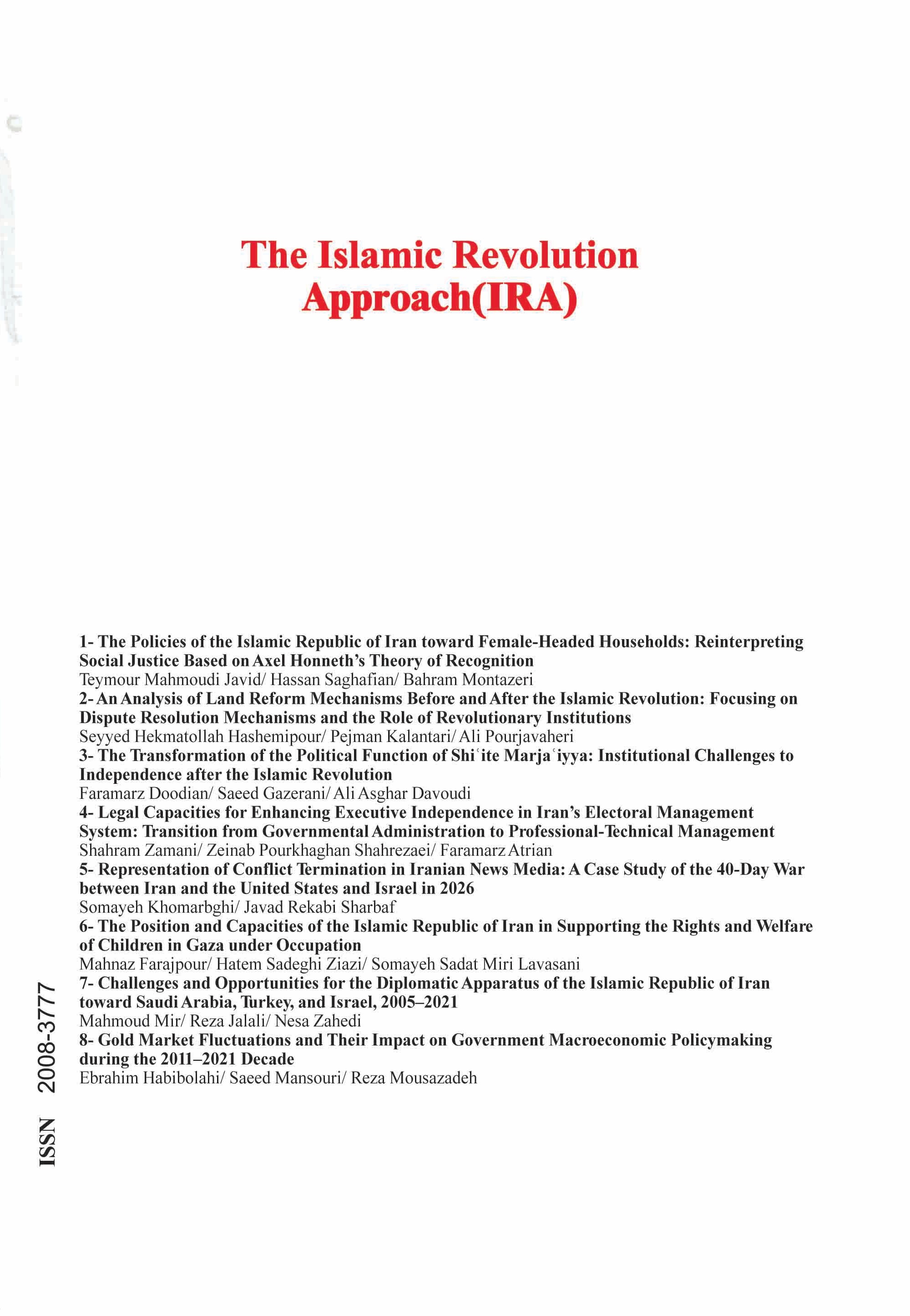
The Islamic Revolution Approach

The Islamic Revolution Approach

The Position and Capacities of the Islamic Republic of Iran in Supporting the Rights and Welfare of Children in Gaza under Occupation

Document Type : Original Article

Authors
1 Department of International Law, UAE Branch, Islamic Azad University, Dubai, United Arab Emirates
2 Associate Professor, Department of Law, Payame Noor University, Tehran, Iran (Corresponding Author)
3 Assistant Professor, Department of Law, Payame Noor University, Tehran, Iran
Abstract
The situation of children in Gaza under conditions of occupation and armed conflict has made the protection of their rights and welfare, as well as the role of third States in this regard, an important issue in international law. This study aims to identify and analyze the position and capacities of the Islamic Republic of Iran in supporting the rights and welfare of children in Gaza and addresses the question of what legal, diplomatic, and humanitarian capacities Iran possesses in this field. The research hypothesis is that, without resorting to coercive intervention, the Islamic Republic of Iran possesses significant legal, diplomatic, humanitarian, and civil-society capacities; however, their effectiveness depends on their coordinated, rights-based, and multilateral utilization. The study employs a descriptive-analytical method and draws on library and documentary sources, including instruments of international law, reports of international organizations, and specialized academic literature. The findings indicate that utilizing international child rights and humanitarian law, engagement within international institutions, multilateral and public diplomacy, and humanitarian and civil-society capacities constitute the principal avenues available to Iran. Nevertheless, restrictions on access, sanctions, and political and institutional constraints affect the effectiveness of these capacities.
Introduction
The situation of children in Gaza represents a major challenge to the contemporary international legal framework governing the protection of children during occupation and armed conflict. Children are particularly vulnerable to the direct and indirect consequences of hostilities, including death and injury, displacement, disruption of healthcare and education, psychological trauma, and deterioration of living conditions. While international humanitarian law and international human rights law provide specific protections for children, the persistence and scale of such harm raise questions not only about the obligations of the occupying power but also about the potential role of third States. Against this background, the present study focuses on the Islamic Republic of Iran as a State that has consistently regarded the Palestinian issue as an important component of its foreign policy. The central question is what legal, diplomatic, humanitarian, and societal capacities Iran possesses to support the rights and welfare of children in Gaza under occupation. The study hypothesizes that Iran possesses multiple non-coercive capacities in this field, although their effectiveness depends on their coordinated, rights-based, and multilateral application.
Materials and Methods
This research adopts a descriptive-analytical approach. Data were collected through library and documentary research and include international legal instruments concerning children's rights, international humanitarian law, relevant international judicial documents, reports issued by the United Nations and specialized international organizations, and academic studies concerning Gaza, occupation, children's rights, and the role of third States. The collected materials were analyzed by identifying the principal legal obligations applicable to children under occupation and armed conflict and subsequently examining Iran's available capacities within this normative framework. For analytical purposes, these capacities were classified into legal, diplomatic, humanitarian, and civil-society dimensions, while the legal, political, institutional, and operational constraints affecting their implementation were also considered.
Discussion
The analysis demonstrates that Iran's potential role should not be reduced to its political positions concerning Palestine. At the legal level, international child rights and humanitarian law provide normative foundations for advocacy, documentation, accountability initiatives, and support for the protection of civilians. At the diplomatic level, Iran may utilize multilateral institutions, regional organizations, public diplomacy, and international forums to place the protection of children more prominently on international agendas. Humanitarian capacities include support for healthcare, nutrition, emergency education, and psychosocial assistance, while civil-society organizations may complement governmental initiatives. These capacities, however, face significant constraints, including restricted physical access to Gaza, sanctions and financial restrictions, political polarization surrounding the Palestinian question, and institutional obstacles to humanitarian action. Consequently, the existence of capacity does not necessarily translate into effective protection unless different instruments are integrated within a coherent strategy.
Conclusion
The study concludes that the Islamic Republic of Iran possesses a range of non-coercive legal, diplomatic, humanitarian, and civil-society capacities for supporting the rights and welfare of children in Gaza. Their effective utilization requires moving beyond fragmented or predominantly political initiatives toward a coordinated framework centered on children's rights. Greater reliance on internationally recognized legal standards, multilateral cooperation, credible humanitarian mechanisms, institutional transparency, and cooperation with specialized international bodies can enhance the practical effectiveness and international legitimacy of such efforts. Accordingly, a child-centered approach can provide a legal and humanitarian framework through which Iran's existing capacities may be organized into a more coherent strategy for protecting children affected by prolonged occupation and armed conflict.
Bibliographgy
Acharya, A. (2014). The end of American world order. Polity Press.
Additional Protocol I to the Geneva Conventions of 12 August 1949. (1977). Protocol additional to the Geneva Conventions, and relating to the protection of victims of international armed conflicts.
Alston, P., & Goodman, R. (2013). International human rights. American Chemical Society.
Arjomand, S. A. (2016). After Khomeini: Iran under his successors. Oxford University Press.
Bantekas, I. (2025). Human rights obligations of belligerent occupiers: Israel and Gaza. Journal of Conflict and Security Law, 30(1), 103–125.
Barnett, M. (2011). Empire of humanity: A history of humanitarianism. Cornell University Press.
Bellamy, A. J. (2009). Responsibility to protect: The global effort to end mass atrocities. Polity Press.
Bellamy, A. J., & Coen, A. (2015). R2P and humanitarian intervention. In A. J. Bellamy & T. Dunne (Eds.), The Oxford handbook of the responsibility to protect. Oxford University Press.
Boukari, Y. (2024). Gaza, armed conflict and child health. BMJ Paediatrics Open, 8(1), e002407. https://doi.org/10.1136/bmjpo-2024-002407
Committee on the Rights of the Child. (2011). General Comment No. 13: The right of the child to freedom from all forms of violence. United Nations.
Committee on the Rights of the Child. (2013). General Comment No. 16: State obligations regarding the impact of the business sector on children’s rights. United Nations.
Crowley-Vigneau, A. (2025). The responsibility to protect the civilians of Gaza. Journal of Palestine Studies, 54(1), 45–62.
Daraj, H. (2025). The impact of the 2023 Israel–Hamas war on children in Gaza through the lens of international humanitarian law. Bohran Pazhoohi-ye Jahan-e Islam, 12(36), 169–200. [in Persian]
Dennis, M. J. (2005). Application of human rights treaties extraterritorially in times of armed conflict and military occupation. American Journal of International Law, 99(1), 119–141.
Dinstein, Y. (2009). The international law of belligerent occupation. Cambridge University Press.
Evans, G. (2008). The responsibility to protect: Ending mass atrocity crimes once and for all. Brookings Institution Press.
Evans, G., & Sahnoun, M. (2002). The responsibility to protect. Foreign Affairs, 81(6), 99–110.
Finnemore, M., & Sikkink, K. (1998). International norm dynamics and political change. International Organization, 52(4), 887–917.
Francia, G. (2025). The rights to and within education in armed conflicts: The case of Gaza. Social Sciences, 14(9), 524. https://doi.org/10.3390/socsci14090524
Human Rights Council. (2022). Report of the Special Rapporteur on the situation of human rights in the Palestinian territories occupied since 1967. United Nations.
International Committee of the Red Cross. (1949). Geneva Convention relative to the protection of civilian persons in time of war (Fourth Geneva Convention).
International Committee of the Red Cross. (2022). Israel and the occupied territories: ICRC operational update. ICRC.
International Court of Justice. (2004). Legal consequences of the construction of a wall in the occupied Palestinian territory (Advisory Opinion). ICJ Reports.
International Criminal Court. (2021). Situation in the State of Palestine. ICC.
International Law Commission. (2001). Draft articles on responsibility of States for internationally wrongful acts. United Nations.
Kennedy, D. (2006). Of war and law. Princeton University Press.
Khodravisi, H., Fattahi, S., & Beheshtinia, E. (2023). Examining the role of the Islamic Republic of Iran in Trump’s approach to terrorism in the Deal of the Century. Rahyaft-e Enghelab-e Eslami, 17(62), 149–168. [in Persian]
Lang, A. (2016). World trade law after neoliberalism. Oxford University Press.
Miller, K. E., & Rasmussen, A. (2010). War exposure, daily stressors, and mental health in conflict and post-conflict settings. Social Science & Medicine, 70(1), 7–16.
Minear, L. (2002). The humanitarian enterprise: Dilemmas and discoveries. Kumarian Press.
Price, R. (2003). Transnational civil society and advocacy in world politics. World Politics, 55(4), 579–606.
Safarpour, H., Ahmadi, H., & Abazari, M. (2022). A constructivist approach to the national security of the Islamic Republic of Iran and the role of the Axis of Resistance. Rahyaft-e Enghelab-e Eslami, 16(60), 65–84. [in Persian]
Salehi, F., Kaviani, R., & Motalebi, M. (2023). The impact of the Likud Party’s positions on the security of the Islamic Republic of Iran (2003–2020). Rahyaft-e Enghelab-e Eslami, 17(63), 215–232. [in Persian]
Sassòli, M. (2019). International humanitarian law: Rules, controversies, and solutions to problems arising in warfare. Edward Elgar Publishing.
Skogly, S. I. (2012). Beyond national borders: States’ human rights obligations in international cooperation. Intersentia.
UNESCO. (2021). Education under attack 2021. UNESCO.
UNICEF. (2023). Situation of children in the Gaza Strip. UNICEF.
United Nations Office for the Coordination of Humanitarian Affairs. (2023). Humanitarian needs overview: Occupied Palestinian territory. United Nations.
United Nations. (1989). Convention on the Rights of the Child. United Nations.
United Nations. (2025). Children and armed conflict: Report of the Secretary-General (A/79/878–S/2025/247).
Welsh, J. (2016). The responsibility to protect: Securing the individual in international society. Routledge.
World Health Organization. (2022). Health conditions in the occupied Palestinian territory. WHO.
Zare Nemati, R., & Zamani, S. G. (2024). International obligations of states in managing crises arising from communicable diseases among children: With emphasis on the Gaza crisis and the COVID-19 pandemic. Pazhuhesh-ha-ye Hoquq-e Eqtesadi va Tejari, 2(2), 11–50. [in Persian]
Keywords

 
Acharya, A. (2014). The end of American world order. Polity Press.
Additional Protocol I to the Geneva Conventions of 12 August 1949. (1977). Protocol additional to the Geneva Conventions, and relating to the protection of victims of international armed conflicts.
Alston, P., & Goodman, R. (2013). International human rights. American Chemical Society.
Arjomand, S. A. (2016). After Khomeini: Iran under his successors. Oxford University Press.
Bantekas, I. (2025). Human rights obligations of belligerent occupiers: Israel and Gaza. Journal of Conflict and Security Law, 30(1), 103–125.
Barnett, M. (2011). Empire of humanity: A history of humanitarianism. Cornell University Press.
Bellamy, A. J. (2009). Responsibility to protect: The global effort to end mass atrocities. Polity Press.
Bellamy, A. J., & Coen, A. (2015). R2P and humanitarian intervention. In A. J. Bellamy & T. Dunne (Eds.), The Oxford handbook of the responsibility to protect. Oxford University Press.
Boukari, Y. (2024). Gaza, armed conflict and child health. BMJ Paediatrics Open, 8(1), e002407. https://doi.org/10.1136/bmjpo-2024-002407
Committee on the Rights of the Child. (2011). General Comment No. 13: The right of the child to freedom from all forms of violence. United Nations.
Committee on the Rights of the Child. (2013). General Comment No. 16: State obligations regarding the impact of the business sector on children’s rights. United Nations.
Crowley-Vigneau, A. (2025). The responsibility to protect the civilians of Gaza. Journal of Palestine Studies, 54(1), 45–62.
Daraj, H. (2025). The impact of the 2023 Israel–Hamas war on children in Gaza through the lens of international humanitarian law. Bohran Pazhoohi-ye Jahan-e Islam, 12(36), 169–200. [in Persian]
Dennis, M. J. (2005). Application of human rights treaties extraterritorially in times of armed conflict and military occupation. American Journal of International Law, 99(1), 119–141.
Dinstein, Y. (2009). The international law of belligerent occupation. Cambridge University Press.
Evans, G. (2008). The responsibility to protect: Ending mass atrocity crimes once and for all. Brookings Institution Press.
Evans, G., & Sahnoun, M. (2002). The responsibility to protect. Foreign Affairs, 81(6), 99–110.
Finnemore, M., & Sikkink, K. (1998). International norm dynamics and political change. International Organization, 52(4), 887–917.
Francia, G. (2025). The rights to and within education in armed conflicts: The case of Gaza. Social Sciences, 14(9), 524. https://doi.org/10.3390/socsci14090524
Human Rights Council. (2022). Report of the Special Rapporteur on the situation of human rights in the Palestinian territories occupied since 1967. United Nations.
International Committee of the Red Cross. (1949). Geneva Convention relative to the protection of civilian persons in time of war (Fourth Geneva Convention).
International Committee of the Red Cross. (2022). Israel and the occupied territories: ICRC operational update. ICRC.
International Court of Justice. (2004). Legal consequences of the construction of a wall in the occupied Palestinian territory (Advisory Opinion). ICJ Reports.
International Criminal Court. (2021). Situation in the State of Palestine. ICC.
International Law Commission. (2001). Draft articles on responsibility of States for internationally wrongful acts. United Nations.
Kennedy, D. (2006). Of war and law. Princeton University Press.
Khodravisi, H., Fattahi, S., & Beheshtinia, E. (2023). Examining the role of the Islamic Republic of Iran in Trump’s approach to terrorism in the Deal of the Century. Rahyaft-e Enghelab-e Eslami, 17(62), 149–168. [in Persian]
Lang, A. (2016). World trade law after neoliberalism. Oxford University Press.
Miller, K. E., & Rasmussen, A. (2010). War exposure, daily stressors, and mental health in conflict and post-conflict settings. Social Science & Medicine, 70(1), 7–16.
Minear, L. (2002). The humanitarian enterprise: Dilemmas and discoveries. Kumarian Press.
Price, R. (2003). Transnational civil society and advocacy in world politics. World Politics, 55(4), 579–606.
Safarpour, H., Ahmadi, H., & Abazari, M. (2022). A constructivist approach to the national security of the Islamic Republic of Iran and the role of the Axis of Resistance. Rahyaft-e Enghelab-e Eslami, 16(60), 65–84. [in Persian]
Salehi, F., Kaviani, R., & Motalebi, M. (2023). The impact of the Likud Party’s positions on the security of the Islamic Republic of Iran (2003–2020). Rahyaft-e Enghelab-e Eslami, 17(63), 215–232. [in Persian]
Sassòli, M. (2019). International humanitarian law: Rules, controversies, and solutions to problems arising in warfare. Edward Elgar Publishing.
Skogly, S. I. (2012). Beyond national borders: States’ human rights obligations in international cooperation. Intersentia.
UNESCO. (2021). Education under attack 2021. UNESCO.
UNICEF. (2023). Situation of children in the Gaza Strip. UNICEF.
United Nations Office for the Coordination of Humanitarian Affairs. (2023). Humanitarian needs overview: Occupied Palestinian territory. United Nations.
United Nations. (1989). Convention on the Rights of the Child. United Nations.
United Nations. (2025). Children and armed conflict: Report of the Secretary-General (A/79/878–S/2025/247).
Welsh, J. (2016). The responsibility to protect: Securing the individual in international society. Routledge.
World Health Organization. (2022). Health conditions in the occupied Palestinian territory. WHO.
Zare Nemati, R., & Zamani, S. G. (2024). International obligations of states in managing crises arising from communicable diseases among children: With emphasis on the Gaza crisis and the COVID-19 pandemic. Pazhuhesh-ha-ye Hoquq-e Eqtesadi va Tejari, 2(2), 11–50. [in Persian]